
keyword Extractor Use cases

Introduction
Keyword extraction is no longer just an SEO trick. Today, it’s a core research and content intelligence tool used by journalists, bloggers, marketers, and digital teams across the world.
Whether you’re analyzing a breaking news article, planning a blog post, or researching competitors’ content, keyword extraction helps you quickly understand what a piece of content is really about — without reading every single line.
This guide breaks down practical keyword extractor use cases, showing exactly how professionals use this technique to save time, improve accuracy, and make better content decisions.
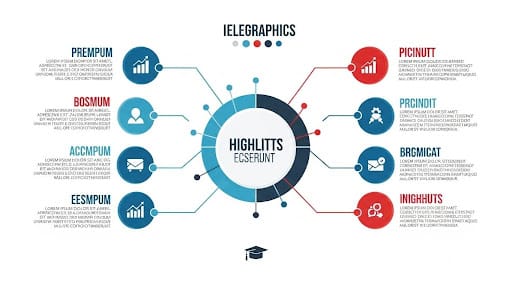
What Is Keyword Extraction (In Simple Terms)?
Keyword extraction is the process of automatically identifying important words, phrases, and concepts from any text, article, URL, or document using AI and NLP (Natural Language Processing).
Instead of guessing topics manually, a keyword extractor highlights:
- Core topics
- Repeated meaningful phrases
- Contextually related terms
- Search-intent driven keywords
This makes it extremely useful beyond just SEO.
Why Keyword Extraction Matters Across Professions
Different professionals use keyword extraction differently:
- Journalists → faster research & story framing
- Bloggers → better SEO & content planning
- Marketers → smarter campaigns & competitor analysis
The use cases change, but the core benefit stays the same:
👉 clarity, speed, and insight.
Use Case 1: How Journalists Use Keyword Extraction
Journalists deal with large volumes of information every day — reports, interviews, press releases, PDFs, and research papers.
Real-world journalist workflows
Journalists use keyword extraction to:
- Quickly summarize long reports
- Identify dominant themes in speeches or documents
- Detect hidden angles or emerging topics
- Prepare interview questions faster
For example, when analyzing a 30-page government report, a keyword extractor can instantly surface:
- Policy focus areas
- Repeated concerns
- Key entities (people, places, organizations)
This saves hours of manual scanning.

Journalists working with long documents often rely on tools like the AI Keyword Extractor Tool to extract key terms without missing context.
→ https://sszconnect.com/ai-keyword-extractor-tool/
Use Case 2: How Bloggers Use Keyword Extraction
Bloggers use keyword extraction primarily for SEO and content planning, but its value goes deeper.
Common blogger use cases
- Finding keywords inside competitor articles
- Turning one article into multiple content ideas
- Improving on-page SEO naturally
- Understanding search intent before writing
Instead of stuffing keywords, bloggers extract:
- Natural phrases readers expect
- Related subtopics Google understands
- Question-based keywords for FAQs
This helps create content that ranks without sounding robotic.

Many bloggers combine keyword extraction with AI-driven SEO workflows to improve rankings faster.
→ https://sszconnect.com/ai-content-optimization/
Use Case 3: How Marketers Use Keyword Extraction
For marketers, keyword extraction is a strategy tool, not just content support.
Marketing-specific use cases
- Competitor content analysis
- Extracting keywords from landing pages
- Understanding audience language
- Optimizing ad copy & CTAs
A marketer can paste a competitor’s URL into a keyword extractor and instantly see:
- Core messaging themes
- Buyer-intent phrases
- Missing opportunities
This allows faster, smarter decisions — especially in paid campaigns.
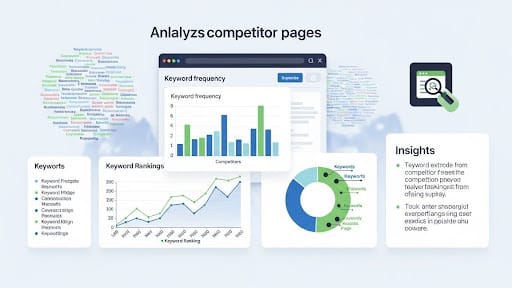
Marketers often extract keywords directly from URLs to analyze competitors quickly.
→ https://sszconnect.com/ai-keyword-extractor-tool/
Keyword Extraction for Competitor Research (5-Minute Method)
One of the most powerful keyword extractor use cases is competitor research.
Fast workflow
- Copy competitor article URL
- Paste into keyword extractor
- Analyze extracted keywords
- Identify gaps and opportunities
This method helps you:
- See what competitors focus on
- Discover missing subtopics
- Build better, more complete content
It’s especially effective for SEO teams and affiliate marketers.
Benefits of Keyword Extraction Across All Use Cases
Regardless of profession, keyword extraction delivers:
- Time savings — minutes instead of hours
- Accuracy — context-aware keyword detection
- Scalability — works for articles, PDFs, URLs
- SEO alignment — matches modern Google algorithms
It also supports voice search, featured snippets, and AI-driven search results, making it future-proof.
Best Practices for Using Keyword Extraction Effectively
- Always review extracted keywords manually
- Focus on relevance, not quantity
- Combine extracted keywords with your expertise
- Use keywords naturally in content
- Avoid exact-match repetition
Smart usage matters more than the tool itself.
Conclusion
Keyword extractor use cases extend far beyond traditional SEO. Journalists use it to understand stories faster, bloggers use it to rank smarter, and marketers use it to outthink competitors.
As search engines become more context-aware, keyword extraction becomes a foundational skill, not an optional one.
If you work with content in any form, learning how to use keyword extraction properly will give you a serious advantage.
FAQs (Rich Snippet Friendly)
1. What are keyword extractor use cases?
They include journalism research, blogging SEO, marketing analysis, and competitor research.
2. Can journalists use keyword extraction?
Yes, it helps summarize long documents and identify key themes.
3. Is keyword extraction useful for bloggers?
Absolutely — it improves SEO, structure, and content planning.
4. How do marketers use keyword extraction?
For competitor analysis, ad copy optimization, and audience research.
5. Can keywords be extracted from URLs?
Yes, many tools allow direct URL analysis.
6. Does keyword extraction support modern SEO?
Yes, it aligns with semantic search and user intent.
7. Is it better than manual keyword research?
It’s faster and more scalable, but human review is still important.